

It’s Alive! But Is It Compliant?
Every employer wants to offer a competitive benefits package. A little flexibility here, a new reimbursement arrangement there, perhaps a wellness incentive to encourage employee engagement. Each addition seems like a great idea at the time.
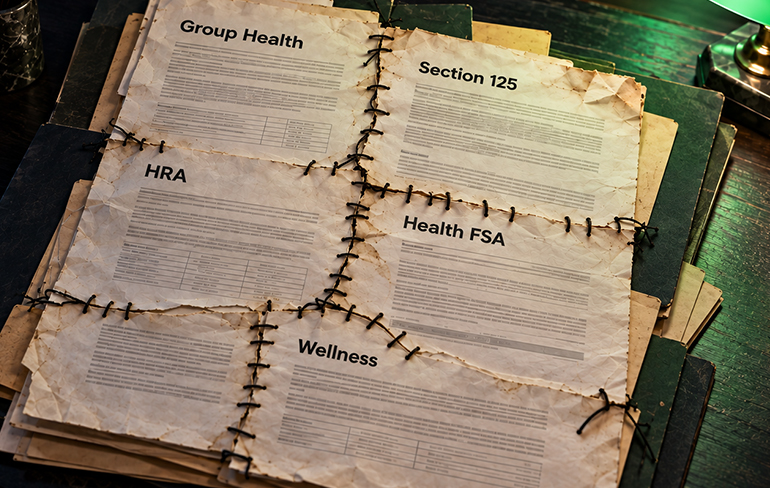
But when benefits are added year after year without stepping back to see how they work together, a perfectly reasonable benefits program can begin to resemble Frankenstein’s monster: a collection of individually useful parts stitched together into something that may not function quite as intended.
Unlike the monster in the classic Halloween story, this one doesn’t need a lightning strike to come to life. All it takes is a few years of benefit changes, forgotten amendments, and plan documents that haven’t kept up with reality.
It Started With Just One Benefit...
Imagine an employer that began with a traditional group health plan and a simple Section 125 Plan. Everything was neatly documented, elections were properly administered, and life was good. Then came an opportunity to offer a Health Reimbursement Arrangement (HRA). A few years later, the employer introduced a wellness program, then eventually a Health FSA, along with a few changes to eligibility and employee contributions.
Each decision made sense individually. But somewhere along the way, the original plan documents stopped telling the complete story.
The HRA was added, but the Wrap Document was never updated. The Section 125 Plan still reflects an outdated benefit offering. The wellness program has incentives that the applicable documentation doesn’t adequately address. Eligibility provisions no longer match current practices.
Congratulations! The Benefits Frankenstein has been created.
When the Pieces Don’t Quite Fit
Much like Frankenstein’s monster, an employer’s benefits program is made up of different components, each with its own purpose. The challenge is making sure those pieces work together.
A Wrap Document may bring certain welfare benefits together under an ERISA plan, while a Section 125 Plan governs employees’ ability to choose between taxable compensation and qualified benefits on a pretax basis. HRAs, FSAs, and HSAs have their own rules for eligibility, reimbursements, substantiation, and other plan provisions.
Then there’s the wellness program. Depending on its design, incentives tied to health factors, medical information, or health-related activities may raise additional considerations under HIPAA, the ADA, GINA, and tax rules.
Individually, each benefit may be perfectly reasonable. But if the pieces aren’t properly connected, the result starts looking less like a carefully designed benefits package and more like something assembled in a laboratory.
Monster’s Weak Spots
The problem isn’t necessarily offering too many benefits. It’s when the documents, administration, and actual benefit offerings no longer align.
An employer might change its eligibility waiting period from 90 days to 60 but leave the old waiting period in the plan document. Or it might introduce a new payroll deduction without confirming that the Section 125 Plan allows it to be taken pretax.
Over time, these little discrepancies can accumulate, making it increasingly difficult to determine whether the plan documents accurately reflect the benefits being offered and administered.
And just like Frankenstein’s monster, these issues have a way of showing up when you least expect them: during an audit, a plan review, or a benefits transition.
Bringing the Benefits Program Back to Life
Fortunately, this monster can be tamed.
Employers and brokers should periodically look at the benefits package as a whole. Are all current benefits appropriately documented? Do eligibility provisions, definitions, and effective dates align? Does actual administration match the written plan terms? Have amendments been adopted when benefit offerings or plan provisions changed?
That review shouldn’t happen only after a problem appears. When a new benefit is introduced, or an existing one changes, reviewing the applicable plan documents should be part of the implementation process.
Don’t Let Your Benefits Become a Compliance Nightmare
A well-designed benefits package can be a tremendous asset. But as benefits evolve, the documentation and administrative practices need to evolve with them.
The next time an employer announces a new benefit, don’t just ask whether it can be offered. Ask how it fits into the existing benefits structure, what documentation may need to change, and whether the employer’s current processes can support it.
Because when it comes to employee benefits, the scariest words aren’t “It’s alive!”
They’re “We haven’t updated that document in years.”
Happy Halloween from your friends on the Medcom Compliance team!