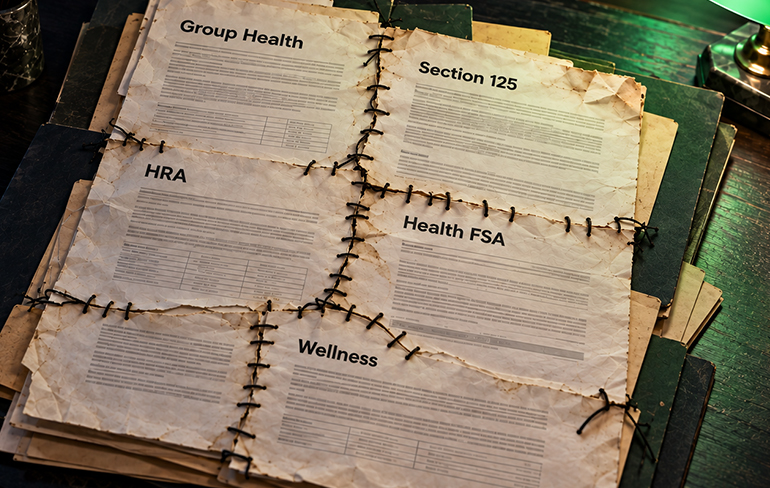


Thanksgiving is all about bringing people together. Everyone contributes something, shares a meal, and hopefully enjoys a better outcome. Employers may approach employee benefits the same way. If one employer can offer health coverage, why not bring several employers together to share costs, increase purchasing power, and expand access to benefits?
On paper, it sounds like a recipe for success. But when multiple employers share benefits, an important compliance question arises: Are they participating in separate plans, or could the arrangement be considered a multiple employer welfare arrangement (MEWA)?
The distinction matters because the arrangement's structure can affect its regulatory obligations, including state insurance regulation and federal reporting requirements.
A Shared Table Doesn't Always Mean a Shared Plan
Imagine several unrelated small businesses joining a shared health benefits program to manage rising insurance costs. Each employer signs a participation agreement, employees receive coverage, and everyone expects to benefit from their combined purchasing power.
Sounds like a good arrangement, right? But has anyone stopped to consider how it is classified under the Employee Retirement Income Security Act of 1974 (ERISA)?
Under ERISA Section 3(40), a MEWA generally includes an employee welfare benefit plan or another arrangement established or maintained to provide welfare benefits to employees of two or more employers, subject to statutory exceptions. An arrangement does not have to call itself a MEWA to fall within the definition.
This is especially important for programs marketed as association plans or pooled benefits arrangements. After all, the name on the menu doesn't determine what's actually being served.
Who's Really Bringing Everyone Together?
ERISA allows a bona fide group or association of employers to act as an employer and sponsor a single employee welfare benefit plan when it meets the applicable criteria. However, simply forming an association, signing participation agreements, or purchasing benefits together does not automatically establish that relationship.
The Department of Labor (DOL) considers the facts and circumstances, including whether the association has purposes beyond providing benefits, whether participating employers share a genuine commonality of interest, and whether they exercise appropriate control over the association and its benefit program.
In other words, an association cannot necessarily turn unrelated businesses into one employer simply by inviting everyone to participate.
Employers within the same ERISA control group are generally treated as a single employer for MEWA purposes. Unrelated employers, however, do not receive that treatment simply because they share a broker, carrier, administrator, or benefits platform.
Different Arrangements, Different Responsibilities
MEWA classification can introduce compliance considerations beyond those applicable to an individual employer's group health plan, including:
- State Insurance Regulation: ERISA preserves significant state authority to regulate MEWAs. Depending on the arrangement and applicable state law, requirements may include licensing, registration, financial oversight, and other insurance-related obligations.
- Federal Reporting: Certain MEWAs must file Form M-1 with the Department of Labor. Filing obligations depend on the arrangement's circumstances and applicable exceptions. Employers should not assume that insurance coverage or individual employer plan documents automatically resolve the question.
- ERISA Responsibilities: When a MEWA is also an ERISA-covered employee welfare benefit plan, applicable ERISA requirements, including fiduciary responsibility provisions, may apply.
- Documentation and Administration: Governing documents, individual employer plan documents, insurance contracts, and administrative responsibilities should align. Individual employer documents alone may not resolve compliance questions about the overall arrangement.
MEWAs are not inherently improper. The key is making sure the arrangement has been properly evaluated and meets applicable federal and state requirements.
Before Taking a Seat at the Table
Before recommending or participating in a shared benefits arrangement, brokers and benefits professionals should consider:
- Who established the arrangement? Identify the sponsor and its relationship with participating employers.
- What is the relationship between employers? Determine whether they belong to a bona fide association, common control group, or are unrelated businesses.
- Who controls the program? Determine who oversees decisions and administration.
- How is it funded and insured? Review the funding structure and insurance contracts.
- What regulatory requirements apply? Evaluate state insurance laws, licensing or registration requirements, Form M-1 reporting, and other applicable obligations.
- Who handles ongoing compliance? Clarify the responsibilities of the arrangement, employers, brokers, administrators, and other service providers.
These questions are a starting point, not a substitute for a fact-specific legal review. When classification is uncertain, consult qualified ERISA counsel and appropriate state insurance regulators.
One Table, Different Rules
Before focusing on potential savings, employers should understand how a shared benefits arrangement is structured, whether it may qualify as a MEWA, and what compliance obligations follow. The goal isn't to discourage these arrangements, but to ensure they have the appropriate structure, documentation, and compliance framework.
Because when it comes to employee benefits, everyone may be welcome at the table, but that doesn't mean everyone is operating under the same rules.
From all of us at Medcom, we wish you and your family a happy Thanksgiving!