

The limits are rising, and so are the opportunities to save! The IRS has officially released the updated 2027 FSA Limits, along with adjustments to commuter benefits and Qualified Small Employer Health Reimbursement Arrangements (QSEHRAs).
These annual inflation adjustments affect several tax-advantaged employee benefits, making the updated figures important for employers preparing for the upcoming year.
What's Changing for 2027?
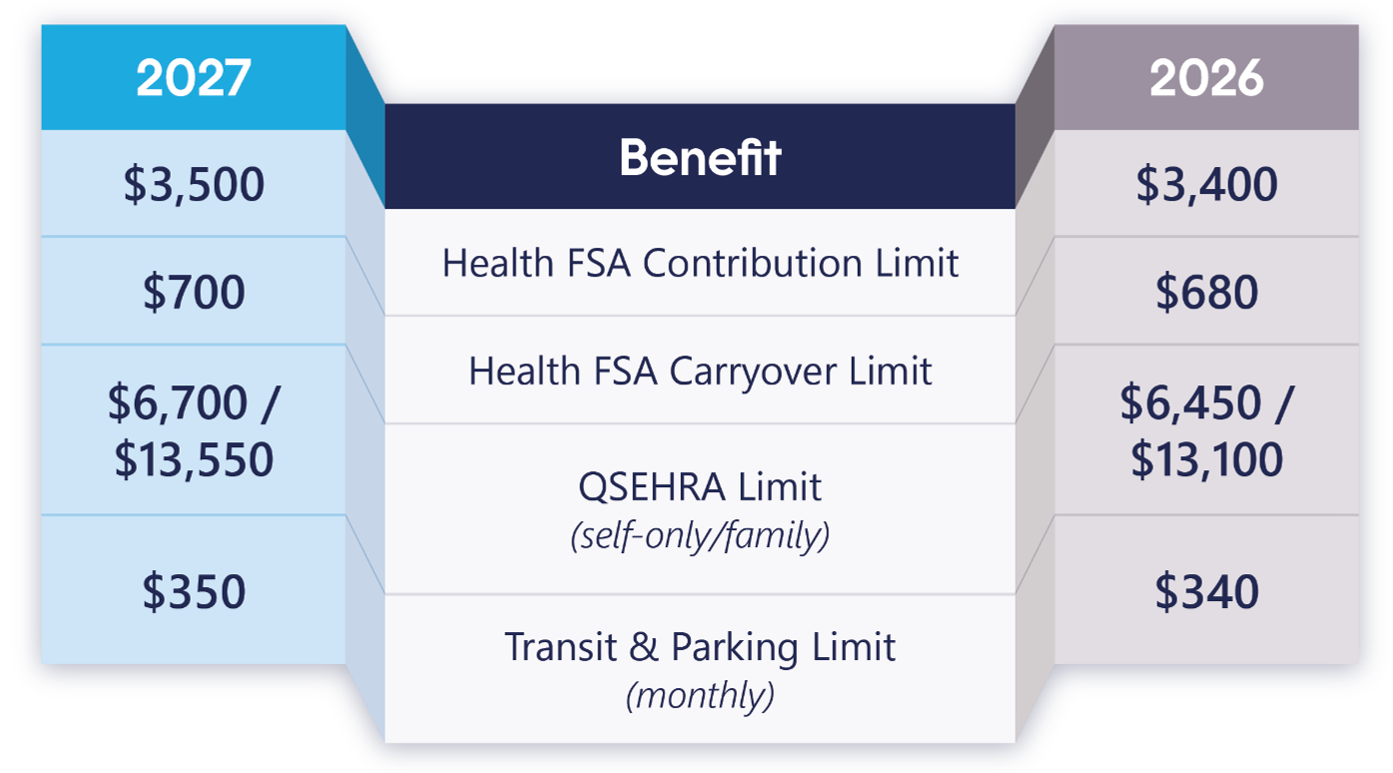
Several benefit limits are increasing for 2027, giving employees more flexibility to set aside pre-tax dollars for eligible expenses. Here's how the updated limits compare to 2026:
Putting the Numbers into Perspective
As employers prepare for 2027, the updated limits highlight several important areas to review to ensure benefit plans remain compliant and employees are informed of any changes.
- Review Plan Documents: Confirm whether existing plan provisions need updating to reflect the new limits.
- Verify Contribution Limits: Ensure employee contributions and employer reimbursements align with applicable plan limits.
- Update Employee Communications: Inform employees of any changes to their benefit offerings ahead of the new year.
- Confirm FSA Carryover Provisions: Remember that carryovers are optional, must be permitted under the plan, and may be lower than the IRS maximum.
Beyond the Latest Limits
The IRS's latest announcement follows earlier updates to the 2027 Health Savings Account (HSA), High-Deductible Health Plan (HDHP), and Excepted Benefit HRA (EBHRA) limits, previously highlighted in our blog, More Savings Ahead: 2027 HSA Limits Are Here.
With these figures available, employers should stay current on annual benefit limits to maintain compliance and support informed benefit decisions. Medcom Benefit Solutions provides the expertise and administrative support to help employers navigate these changes.
Learn more about our consumer-driven health plan solutions.